| Join ARRL Education Specialist Wayne Greene, KB4DSF, on this month’s “On the Air Live” session as he compares the most popular portable antennas, including the ubiquitous end-fed half-wave, random wire, linked dipole, and the 17-foot vertical. Wayne will compare performance and packing trade-offs and deployment requirements. Whether you are setting up a station at a Red Cross shelter ahead of a hurricane or just headed to a park for a POTA activation, this session will help you choose an antenna that fits the operating conditions. The livestream will air on the ARRL Learning Center, learn.arrl.org, June 23 at 8 PM Eastern. Preregistration is required and can be accomplished through the Learning Center. Join ARRL Rhode Island Section Manager Mike Corey, KI1U, at the 2026 Northeast HamXposition, the ARRL New England Division Convention, August 13-16, at the Best Western Royal Plaza Hotel & Trade Center, Marlborough, Massachusetts, for an overview of emergency communications capabilities and resources from the FEMA Region 1 Disaster Emergency Communications team. This presentation will cover RF, satellite, and cellular communications; communications planning and support for field teams, and the Regional Emergency Communications Coordination Working Group. Date, time, and room T.B.A. Corey is an Emergency Management Specialist with FEMA Region 1 and works in the Mission Support Division with the Disaster Emergency Communications Team. Washington Governor Bob Ferguson has issued a video message recognizing the important role amateur radio operators play in supporting communities across the state and encouraging residents to learn more about amateur radio during ARRL Field Day later this month. “During emergencies and natural disasters in Washington state, [hams] may provide one of the only forms of available communications,” said Governor Ferguson. “Field Day is a day for the public to see this communication in action with presentations and activities for all ages.” Colorado ARES®--ATV Training: The success of the Boulder, Colorado, ARES group (BCARES) in providing ATV (amateur television) coverage of major incidents and events for the city’s public safety agencies (sheriff, police and fire departments) has not gone unnoticed. ARRL Colorado Section Emergency Coordinator Perry Lundquist, W6AUN, has asked BCARES to share its experiences and technology with other ARES groups in Colorado. On Saturday, July 18, Lundquist will be hosting a 2-hour Zoom training session for all Colorado ARES groups. Presenters include BCARES EC Allen Bishop, KØARK; and Jim Andrews, KH6HTV. —Amateur Television Journal Colorado State University Hurricane Season Prediction Every hurricane season starts with the well-known prediction from Colorado State University. The annual hurricane season — which runs from June 1 to November 30 — exists because this window consistently provides the three critical ingredients needed for tropical cyclones to form, develop and thrive: warm ocean temperatures, moisture in the atmosphere, and low wind shear. Indications are the 2026 Atlantic hurricane season will be somewhat below average, with 13 named storms (average is 14.4), 55 named storm days (average is 69.4), 6 hurricanes (average is 7.2), 20 hurricane days (average is 27.0), two major (Category 3-4-5) hurricanes (average is 3.2) and 5 major hurricane days (average is 7.4). If you live in a hurricane-prone area, check your gear and know your local, county, state and regional net frequencies, as well as the major nets, especially the Hurricane Watch Net on 14.325 MHz. Know your family shelter and evacuation plan and routes. Check your weather instruments for obtaining measured data, and have a propane stove, cooking utensils, three-day supplies of food and water, cots and sleeping bags. The Virtual NTS Training Net (VNTN) meets via Zoom weekly on Wednesday evenings at 7:00 PM Eastern time. For newcomers, trainer Shawn Dodds, N1CVO, covers the basics, including a National Traffic System (NTS) overview, how traffic is routed and relayed, an explanation of the radiogram form, precedence and handling instructions, voicing, prowords, and ITU phonetics. This is a relaxed atmosphere in which practice and questions are encouraged. Readers of this newsletter can help get the word out, especially to those with no access to local traffic nets. Bill Novak, KA9IKK, reports having sent emails to the South Texas ARES group inviting them to join VNTN. Six of its members showed up on the next net. Novak also sends information about VNTN and the Radiogram Portal via club newsletters and Groups.io mailing lists. —ARRL NTS Letter At the ARRL Executive Committee Meeting on April 22, the committee at Minute 43 addressed the following action: “CEO to establish permanent program for ARES, to include marketing and development of materials, etc.” ARRL CEO David Minster, NA2AA, advised that ARRL provides ARES advertisements in QST. He reminded the committee that the original motion called for an advertising campaign beyond ARRL; however, that aspect still needs to be finalized. He expressed confidence that ARRL has the necessary components in place and simply needs to decide which areas to focus on for the advertising. Texas Senator Ted Cruz, in a strong pre-Memorial Day message, publicly highlighted the critical role that Amateur Radio Service volunteers play during disasters, praising and thanking ham radio operators who provide essential communications when storms and emergencies knock out power and cellular networks and communities are cut off. Senator Cruz observed that in these emergencies, it is ham radio operators who step forward, bringing with them the tools, expertise, and the commitment to reconnect people when it matters most. He noted this dedication was clearly demonstrated in 2017 when Hurricane Harvey’s catastrophic flooding devastated communities across Texas and that it was demonstrated again more recently in the horrific Camp Mystic floods. He emphasized that as the nation prepares for yet another summer storm season, ham radio’s role remains just as vital as ever. Stating that while future emergencies will come, Senator Cruz pointed out that amateur radio operators would as well — ready to respond, to serve, and to make a difference. He ended his statements by thanking the ham radio community for its courage and commitment, noting that amateur radio’s work strengthens our communities. Cruz is Chairman of the Senate Committee on Commerce, Science, and Transportation. His comments align with ARRL’s ongoing efforts to strengthen and protect amateur radio’s role in emergency preparedness and public service communications. His comments also reflect growing Congressional recognition of the value amateur radio operators bring to communities across the country. ARRL continues to advocate for legislation that protects and strengthens amateur radio’s role in emergency preparedness and public service communications. Amateur Radio Emergency Preparedness Act Update ARRL’s nationwide grassroots campaign supporting the bipartisan Amateur Radio Emergency Preparedness Act has generated more than 155,000 letters to members of Congress in support of H.R. 1094 and S. 459. The legislation seeks to ensure that amateur radio operators can install and maintain effective outdoor antennas at residences where private land-use restrictions might otherwise prohibit them, helping communities maintain resilient emergency communications capabilities during disasters. ARRL Legislative Committee Chairman and West Gulf Division Director John Robert Stratton, N5AUS, said the continued outreach effort has required “long hours on the ground and an uncountable number of personal meetings with senators, representatives, and their staffs” to raise awareness of the importance of amateur radio to the nation. “The most recent proof that those efforts have, and are, increasing Congressional support for amateur radio is evidenced by the decision of Chairman Cruz to publicly share his personal views on the value and importance of amateur radio to the nation,” Stratton said. ARRL encourages amateur radio operators to participate in its letter writing campaign, located at Send-A-Letter.org/HOA, in support of the Amateur Radio Emergency Preparedness Act and to share information about the public service role amateur radio plays in communities nationwide. |
 | |
2026 DARK WIRE Exercise: High-Speed Digital Communications Forge a New Standard in Hospital Resiliency |
On May 30, the ARES LAX Northeast district in southern California successfully executed “DARK WIRE,” a rigorous communications drill that tested the resilience of hospital connectivity during a catastrophic “Digital Quake” scenario. The exercise simulated the total loss of cellular and internet infrastructure, exacerbated by a power grid failure and a major M 6.3 earthquake in the San Fernando Valley. The results were resounding: Through advanced digital protocols and seamless inter-agency collaboration, amateur radio operators maintained rock-solid situational awareness across multiple medical facilities. Precision Digital Operations on the 2-Meter Band The backbone of the exercise was a sophisticated, high-speed digital network operating on the 2-meter band. Operators leveraged the robust capabilities of VARA FM, using VARA Chat for rapid, real-time messaging, and Winlink for formal traffic and reporting. The digital ecosystem was further enhanced by Pinpoint APRS, which provided a continuous, real-time visual map of hospital service levels (color-coded by operational status) and operator locations. This visual dashboard proved indispensable, allowing emergency managers to assess facility readiness—from staffing percentages to system uptime—at a glance. HTML Forms: Efficiency Through Innovation A standout success of DARK WIRE was the introduction of offline, lightweight HTML forms for data transmission. By exporting critical data—such as HAvBED reports, LA County ICS-213 resource requests, and capacity surveys—into tiny, structured JSON files, the team achieved unprecedented efficiency. These microscopic data packets moved across the airwaves almost instantaneously. This innovation effectively neutralized the common “traffic jam” effect often seen in high-volume drills, ensuring that congestion-free digital transmissions could proceed without the bottlenecks that typically plague busy emergency nets. Strengthening Hospital and EMS Partnerships Beyond the technical milestones, the exercise highlighted the profound strength of the partnerships cultivated between ARES operators and Los Angeles County medical and EMS agencies. “The success of this exercise is a direct result of the extraordinary dedication of our communications volunteers,” noted Lew Soloway, AC6LS, the Exercise Net Control. “By integrating directly into hospital teams, radio operators acted as critical force multipliers. From the successful reactivation of the Arcadia site, which served as an essential communications bridge for the Pomona and San Dimas hospitals, to the precise reporting processed by Net Control, the collaboration demonstrated that amateur radio is not just an alternative to modern infrastructure—it is a dependable, essential layer of redundancy.” As ARES LAX Northeast continues to refine these techniques, the 2026 DARK WIRE exercise stands as a blueprint for the future of emergency communications, proving that when the internet goes dark, the amateur radio community is ready to keep the information flowing. -- Oliver Dully, K6OLI, District Emergency Coordinator, ARES LAX Northeast www.laxnortheast.org |
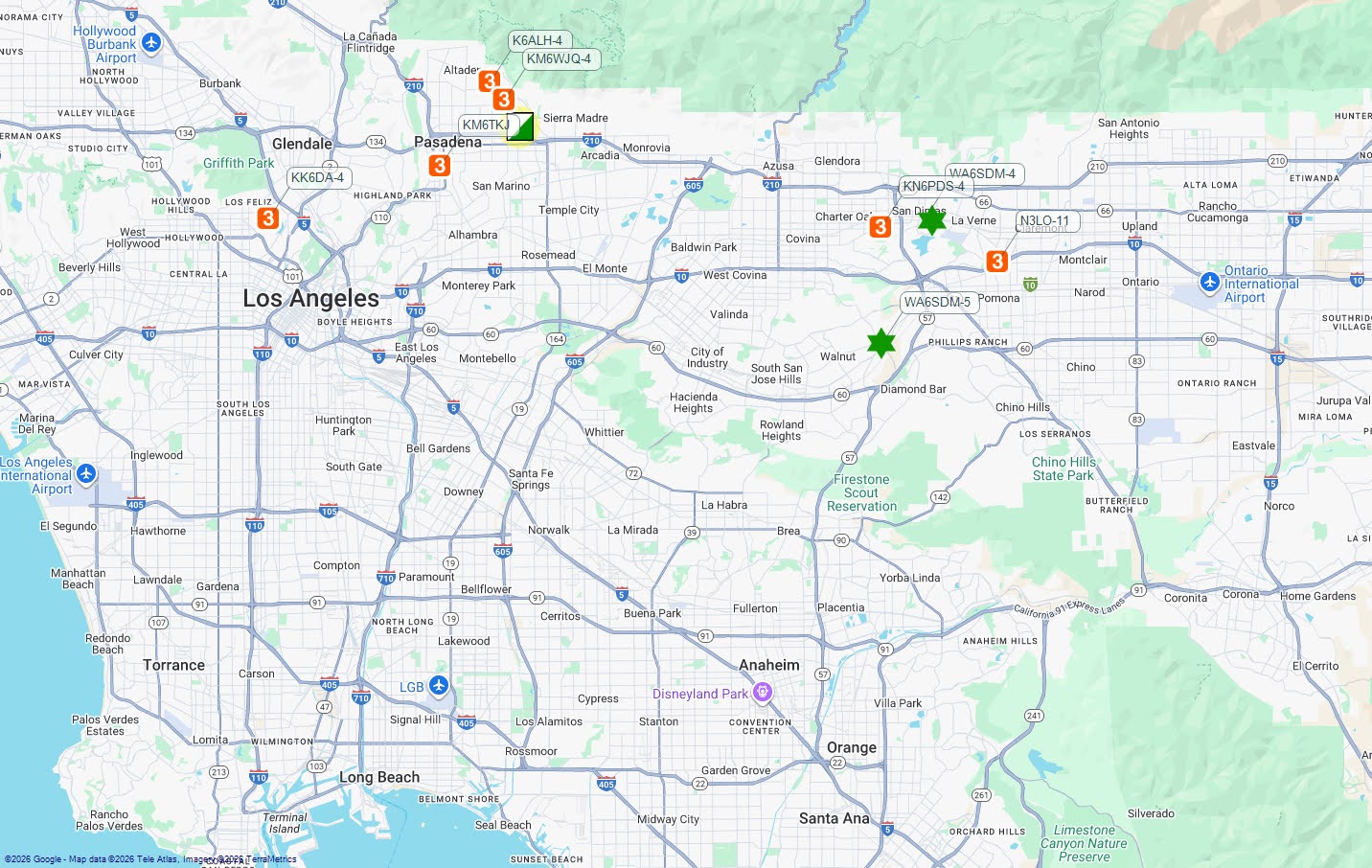 | | APRS Map of DARK WIRE exercise as seen by Lew Soloway, AC6LS, Net Control, at 10:35 AM. The PinpointAPRS screenshot shows most stations reporting fictional service level “Orange -- Some assistance from the jurisdiction is required.” |
|
|
|
Lessons from the S’Mores Table |
In summer 2025, I was in my second full year as a volunteer park patroller at Silverwood Park, part of the Three Rivers Park District north of Minneapolis. The assignment has little to do with amateur radio, yet it provided some of the most valuable lessons I’ve learned about emergency communications, volunteer service, and agency relationships. Park patrollers receive training in guest assistance, observation, and basic first aid. Our role is simple: greet visitors, help where we can, and report incidents when necessary. Like many volunteer organizations, we support the mission of the agency rather than define it. Dan McNulty, WØEIB, helped recruit me into the program. Dan, who also has a medical background, often makes an observation familiar to many ARES® volunteers: when you offer practical support such as basic first aid, situational awareness, and field observations, organizations quickly discover additional ways volunteers can help. Most patrol shifts are routine. We walk trails, answer questions, assist visitors, and occasionally provide minor first aid within the limits of our training. The park district reinforces those skills through annual exercises, role-playing scenarios, and recurring first aid and AED certification. Interestingly, Three Rivers trains many of the first aid volunteers who support other events across our area. One evening, I was assigned to staff a community s’mores table. My responsibilities included handing out graham crackers, chocolate bars, and marshmallows while helping supervise a fire pit. Not exactly what most people picture when they think of emergency communications. Before the event began, I asked the park supervisor a question familiar to anyone who has worked within the Incident Command System (ICS): “If you’re not here, who is in charge?” She provided her contact information and identified the next person in the chain of command. It was a simple exchange, but it reflected concepts that emergency communicators use every day. As the year progressed, I found myself helping with children’s art programs, community skating events, and large public gatherings that attracted hundreds of visitors. At one winter event featuring illuminated hot-air balloons on a frozen lake, a guest slipped, fell, and briefly lost consciousness. A nurse and EMT who happened to be nearby immediately began assisting. I supplied gloves and a thermal blanket from my medical pack, contacted park leadership, and helped document the incident while EMS responded. On another occasion, a child became separated from a parent near dusk. Working with park staff, we quickly organized a search plan and established communications. The child was located within minutes. None of these incidents required amateur radio. Yet every one of them relied on skills that are central to emergency communications: situational awareness, clear reporting, understanding chain of command, resource coordination, documentation, and calm decision-making under pressure. Those experiences led me to reflect on a question frequently discussed within ARES groups: Why aren’t trained amateur radio operators requested more often by served agencies? Part of the answer may be that many agencies no longer view communications as their primary challenge. Modern cellular networks, internet connectivity, and commercial communications systems are remarkably reliable. Even in conflict zones such as Ukraine, cellular systems have often remained operational despite severe disruption. What agencies continue to need are capable volunteers who can help accomplish the mission. They need people who can observe conditions, relay information, assist with public safety, support documentation, provide basic first aid within their training, and fit seamlessly into an organizational structure. That doesn’t diminish the importance of amateur radio. Rather, it broadens the value proposition. Communications is no longer just about passing messages over a radio. Increasingly, it includes collecting information, supporting situational awareness, and helping organizations build a common operating picture. The experience also highlighted several opportunities for volunteer emergency communications programs: - Continue expanding training beyond radio operation alone
- Reward and recognize volunteer participation and service hours
- Focus on understanding and supporting the mission of served agencies
- Develop skills in observation, reporting, documentation, and incident management
- Emphasize practical service rather than technology for its own sake
One park supervisor shared a simple observation with me: “(Agency) relationships are free.” She was right. Relationships are built one conversation, one event, and sometimes one s’more table at a time. When volunteers consistently help organizations accomplish their mission, trust develops. Once that trust exists, opportunities for amateur radio and emergency communications support often follow naturally. The lesson from Silverwood Park was straightforward: Agencies rarely need a lecture about radio systems, talk groups, or communications theory. What they need are capable volunteers who understand their mission and are willing to help. The radios come later. — Erik Westgard, NY9D, Assistant Section Emergency Coordinator, Events, ARRL Minnesota Section |
 | |
A tip of the ARRL fedora goes to Oliver Dully, K6OLI, and Erik Westgard, NY9D, two regular contributors to this newsletter. They represent the dreams of all newsletter editors such as me: Contributors who are not only superb practitioners and true subject matter experts, but eloquent writers as well. Have a happy and safe Field Day, the grandaddy of all amateur radio emergency communications exercises! —Rick Palm, K1CE |
 | |
The Amateur Radio Emergency Service® (ARES) consists of licensed amateurs who have voluntarily registered their qualifications and equipment with their local ARES leadership, for communications duty in the public service when disaster strikes. Every licensed amateur, regardless of membership in ARRL or any other local or national organization is eligible to apply for membership in ARES. Training may be required or desired to participate fully in ARES. Please inquire at the local level for specific information. Because ARES is an amateur radio program, only licensed radio amateurs are eligible for membership. The possession of emergency-powered equipment is desirable, but is not a requirement for membership. How to Get Involved in ARES: Fill out the ARES Registration form and submit it to your local Emergency Coordinator. |
ARES® is a program of ARRL The National Association for Amateur Radio®. No other organization works harder than ARRL to promote and protect amateur radio! ARRL members enjoy many benefits and services including digital magazines, e-newsletters, online learning (learn.arrl.org), and technical support. Membership also supports programs for radio clubs, on-air contests, Logbook of The World®, ARRL Field Day, and the all-volunteer ARRL Field Organization. Join ARRL or renew today! www.arrl.org/join The ARES Letter is free of charge to ARRL members. Subscribe: www.arrl.org/subscribe Find ARRL on Facebook, Instagram, YouTube, X (@arrl and @arrl_ares), and Threads ARRL Store: www.arrl.org/shop Support programs not funded by member dues at www.arrl.org/donate Contact us to advertise in this newsletter (space subject to availability): ads@arrl.org |
The ARES Letter is published on the third Wednesday of each month. ARRL members may subscribe at no cost or unsubscribe by editing their Member Data Page at www.arrl.org/opt-in-out. Copyright © 2026 American Radio Relay League, Incorporated. Use and distribution of this publication, or any portion thereof, is permitted for non-commercial or educational purposes, with attribution. All other purposes require written permission. |
|
|
| |
|
|
|


Comments
Post a Comment